Recognizing Unhealthy Relationships:
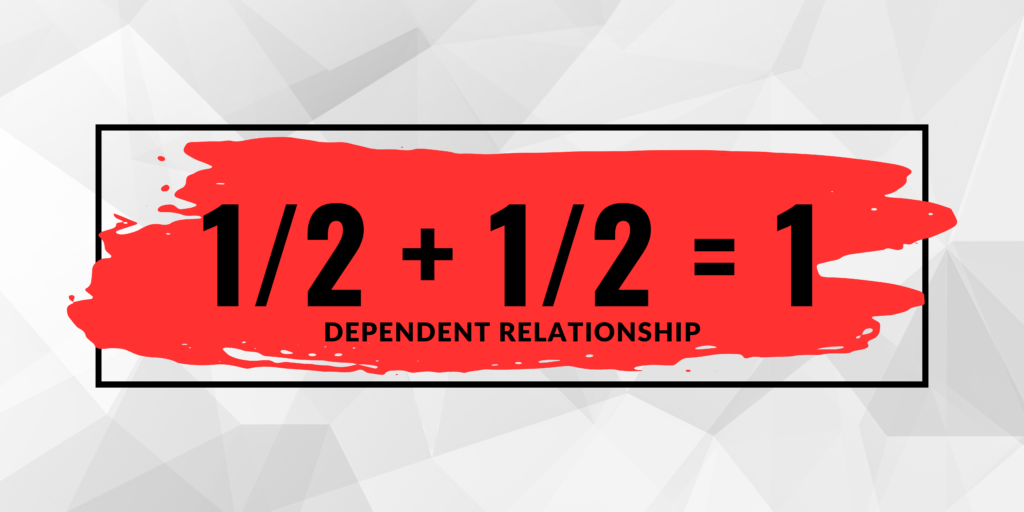
Unhealthy relationships are characterized by toxicity, imbalance, and dysfunction. Individuals involved in an unhealthy relationship tend to have unresolved experiences with previous relations or were not properly prepared to involve themselves with others in a way that supports a healthy or favorable experience. Nevertheless, individuals involving themselves in any kind of relations with another person should have a sound idea of oneself. The formula below in red illustrates when two individuals in an unhealthy relationship usually have one or more reasons for unhealthy dependencies. May that be with each other or other dependency issues like insecurities, or substance abuse. Nevertheless, their reliance upon each other is not healthy in some form. Their unhealthy reliance upon each other makes them whole. An unhealthy dependence. Here are some warning signs to watch out for:
Lack of Communication
Communication breakdowns and constant misunderstandings are common in unhealthy relationships. One or both partners may resort to passive-aggressive behavior or stonewalling, leading to escalating conflicts. Rather than addressing issues directly, communication becomes a battleground of blame and resentment, further eroding trust and intimacy.
Disrespect
Disrespect can manifest in various forms, including verbal abuse, insults, or disregard for boundaries. In unhealthy relationships, one partner may exert control through manipulation, gaslighting, or criticism. Disrespectful behavior undermines the foundation of mutual respect, creating a hostile environment where individuals feel devalued and invalidated.
Distrust
Trust issues plague unhealthy relationships, fueled by lies, deceit, or infidelity. Even minor transgressions can erode trust over time, breeding insecurity and resentment. Insecurity and jealousy may manifest as controlling behaviors or constant surveillance, further exacerbating feelings of mistrust and betrayal.
Power Imbalance
Unhealthy relationships often feature a power imbalance, with one partner wielding disproportionate control over the other. This imbalance may stem from factors such as age, gender, socioeconomic status, or emotional manipulation. The dominant partner may dictate the terms of the relationship, leaving the other feeling powerless and marginalized. This dynamic perpetuates a cycle of dependency and subjugation, hindering both individuals’ personal growth and autonomy.
Lack of Support
Instead of uplifting each other, partners in unhealthy relationships may undermine or sabotage each other’s goals and aspirations. Emotional neglect or abandonment further exacerbates feelings of loneliness and isolation. Rather than being each other’s source of strength, partners in unhealthy relationships may drain each other emotionally, perpetuating a cycle of dysfunction and despair.
Healing and Bringing Resolve to Past Issues
Healing past issues and improving relations require a combination of self-reflection, empathy, communication, and sometimes professional support. If you are considering involving yourself in healthy relations especially with the opposite sex, it will be vital to your future success that you bring resolve and build a better you and establish a sound foundation of who you are and choose to be. Here are some necessities:
1. Self-Awareness: Understand your own emotions, triggers, and patterns of behavior. Recognizing your own role in past conflicts is crucial for growth.
2. Acceptance: Acknowledge past events and their impact on you and others involved. Acceptance doesn’t mean condoning or excusing behavior but rather understanding and coming to terms with what has happened.
3. Forgiveness: Forgiveness doesn’t mean forgetting or reconciling with the person who hurt you, but it means letting go of the anger and resentment that can weigh you down. Forgiving doesn’t necessarily mean the other person deserves it; it’s a gift you give yourself. This allows you to move on without carrying unnecessary baggage into future relations.
4. Communication: Honest and open communication is key to resolving conflicts and rebuilding relationships. Make sure you develop skills to communicate effectively. Express your feelings and listen actively to the other person’s perspective without judgment.
5. Boundaries: Establishing healthy boundaries is essential for protecting yourself and maintaining respect in relationships. Clearly communicate your boundaries and respect those of others. Boundaries ensure you own wellbeing and contributes to your ability to interact with others in a comfortable fashion.
6. Empathy: Try to understand the perspective and feelings of the other person involved. Empathy fosters understanding and connection, even in difficult situations. Remember consideration includes how others may perceive you and it is part of the equation when processing your own perception of yourself. However, how others perceive you should be equally important or, no more important that how you perceive yourself unless the perception of others improves how you see yourself. This helps establish a healthy opinion of who you are and your independency.
7. Seeking support: Sometimes, healing past wounds requires professional help. Therapy or counseling can provide guidance, support, and tools to navigate complex emotions and relationships. Bringing resolve to your past ailments is an important key to establishing healthy relations in the future.
8. Patience and Persistence: Healing and resolving past issues take time. Be patient with yourself and others, and be willing to put in the effort needed to make positive changes.
By addressing past issues with these necessities in mind, you can work towards healing and building better relations with yourself and with others.
Improving Relations with Oneself
Improving your relationship with yourself is essential for overall well-being and happiness. Here are some strategies to consider:
1. Practice Self-Compassion: Treat yourself with the same kindness and understanding that you would offer to a good friend. Be gentle with yourself, especially during difficult times.
2. Cultivate Self-Awareness: Take time to reflect on your thoughts, feelings, and behaviors. Journaling, meditation, or therapy can help you gain insight into yourself and your inner workings.
3. Set Healthy Boundaries: Learn to say no to things that drain your energy or do not align with your values. Prioritize activities and relationships that bring you joy and fulfillment.
4. Practice Self-Care: Take care of your physical, emotional, and mental health. This includes getting enough sleep, eating nourishing foods, exercising regularly, and engaging in activities that bring you joy.
5. Celebrate Your Strengths: Focus on your strengths and accomplishments rather than dwelling on perceived weaknesses or failures. Celebrate your achievements, no matter how small.
6. Challenge Negative Self-Talk: Notice when you’re being self-critical or judgmental, and challenge those negative thoughts. Replace them with more balanced and compassionate self-talk.
7. Set Realistic Goals: Break down your goals into manageable steps and celebrate your progress along the way. Be realistic about what you can achieve and give yourself credit for your efforts.
8. Practice Gratitude: Take time each day to appreciate the good things in your life, no matter how small. Gratitude can help shift your focus from what’s lacking to what’s already present.
9. Engage in Activities You Enjoy: Make time for hobbies, interests, and activities that bring you pleasure and fulfillment. Having fun and enjoying life is an important part of nurturing your relationship with yourself.
10. Seek Support: Don’t be afraid to reach out to friends, family, or a therapist for support when needed. Building a strong support network can help you navigate life’s challenges more effectively.
Remember that improving your relationship with yourself is an ongoing process that takes time and effort. Be patient with yourself and practice self-compassion along the way. Establish your own identity that allows you to be your own person and independent from others.
Understanding Healthy Relationships:In the intricate tapestry of human connection, relationships come in many shades, from the vibrant hues of love and support to the dark undertones of toxicity and strife. Navigating this terrain requires a keen understanding of what constitutes a healthy relationship versus an unhealthy one. Let’s delve into the nuances, drawing insights from psychology, personal experiences, and expert opinions. Healthy relationships are like well-tended gardens, flourishing with mutual respect, trust, and support. Here are some key characteristics:
Communication
Open, honest communication forms the cornerstone of healthy relationships. Partners feel comfortable expressing their thoughts, feelings, and concerns, knowing they will be heard and validated. Effective communication involves active listening, empathy, and the willingness to compromise. It’s not just about talking but also about truly understanding and connecting with each other on a deeper level.
Respect
Each individual’s autonomy and boundaries are honored and respected. There is no room for manipulation, coercion, or belittlement. Instead, partners uplift and empower each other. Respect encompasses acceptance of differences, appreciation for each other’s strengths, and acknowledgment of personal agency. It lays the foundation for a supportive and harmonious partnership where both individuals feel valued and cherished.
Trust
Trust is the bedrock of any healthy relationship. Partners have faith in each other’s integrity and reliability, fostering a sense of security and emotional intimacy. Trust is built over time through consistent actions that align with words, such as honesty, reliability, and loyalty. It involves vulnerability and the willingness to rely on each other without fear of betrayal or abandonment. In a trusting relationship, partners feel safe to be their authentic selves, knowing that their vulnerabilities will be met with compassion and understanding.
Equality
Healthy relationships thrive on a foundation of equality, where power and decision-making are shared. There is no room for dominance or control; instead, partners collaborate as equals. Equality extends beyond the division of household chores or financial responsibilities; it encompasses a mutual respect for each other’s opinions, preferences, and aspirations. In a truly equal partnership, both individuals have an equal voice and agency in shaping the direction of the relationship.
Support
In times of joy and adversity, partners stand by each other’s side, offering unwavering support and encouragement. Emotional and practical support are freely given and received. Whether celebrating achievements or navigating challenges, partners in healthy relationships prioritize each other’s well-being and growth. Supportive behaviors include active listening, validation of feelings, offering constructive feedback, and being present during difficult times. It’s about being each other’s cheerleader, confidant, and rock, creating a sense of security and belonging.
Conclusion
In conclusion, nurturing healthy relationships requires intention, effort, and a deep commitment to mutual growth and respect. By recognizing the signs of unhealthy dynamics and cultivating positive habits, individuals can cultivate relationships that enrich their lives and stand the test of time. Remember, love should uplift, not diminish. Choose wisely and cherish the bonds that nourish your soul. Develop relations with others that equate to its own entity and not engulf those involved.
References
Gottman, John M., and Nan Silver.The Seven Principles for Making Marriage Work.Harmony, 2015.
Chapman, Gary. The Five Love Languages: The Secret to Love That Lasts.Northfield Publishing, 2015.
Cloud, Henry, and John Townsend. Boundaries: When to Say Yes, How to Say No to Take Control of Your Life. Zondervan, 2017.
Lerner, Harriet. The Dance of Anger: A Woman’s Guide to Changing the Patterns of Intimate Relationships. HarperCollins, 2014.
Sue, Derald Wing. Microaggressions in Everyday Life: Race, Gender, and Sexual Orientation. Wiley, 2010.
“Life is much bigger than ourselves. The pursuit of happiness includes the mastering of ones inner self to achieve the highest possible” Never give up, never say never!
I’ve read several just right stuff here. Certainly price bookmarking for revisiting. I wonder how a lot effort you place to create this kind of great informative website.
Right, checking out 5567com now. Seems alright at first glance, got a decent selection. See for yourself! 5567com
Just downloaded the 66clubgameapk, fingers crossed its a good one! Giving it a go now. Download yours here! 66clubgameapk
Alright, so I’m thinking of signing up for 777sxregister. The registration process looks straightforward. Hope the games are as easy to win! Fingers crossed! 777sxregister
Just logging into jljl55phlogin. Here’s to hoping for some awesome wins tonight! Crossing my fingers. Check it out here jljl55phlogin
tk88 is my go-to spot these days. Good selection of games and the bonuses are pretty sweet. Give tk88 a shot tk88
77win is a really solid platform, especially if you’re into mobile gaming. The app is smooth and the games are fun. Check it out 77win
7 Responses
I’ve read several just right stuff here. Certainly price bookmarking for revisiting. I wonder how a lot effort you place to create this kind of great informative website.
Right, checking out 5567com now. Seems alright at first glance, got a decent selection. See for yourself! 5567com
Just downloaded the 66clubgameapk, fingers crossed its a good one! Giving it a go now. Download yours here! 66clubgameapk
Alright, so I’m thinking of signing up for 777sxregister. The registration process looks straightforward. Hope the games are as easy to win! Fingers crossed! 777sxregister
Just logging into jljl55phlogin. Here’s to hoping for some awesome wins tonight! Crossing my fingers. Check it out here jljl55phlogin
tk88 is my go-to spot these days. Good selection of games and the bonuses are pretty sweet. Give tk88 a shot tk88
77win is a really solid platform, especially if you’re into mobile gaming. The app is smooth and the games are fun. Check it out 77win